
Con[i][ii]
There are many reasons why people believe marijuana should remain illegal.
Much of my sourced content comes from a man named Robert DuPont and his response letter (from his IBH position) to a Global Commission report on drug policy. Another source used in my ‘con’ write-up is a response letter from Mr. Dupont and many DEA officials on the marijuana legalisation in Colorado and Washington State. Sticking with the idea of knowing people’s biases. Robert is a former DEA chief and now runs a consulting company that specialises in providing employee drug testing solutions. He was the first director of the National Institute of Drug Abuse and he was the second white house drug czar under Richard Nixon and Gerald Ford. Therefore, he should be a reputable source for anti-legalisation arguments. He is also the founding president of the IBH, and his personal stance is that marijuana is the most dangerous drug, while he has also come under scrutiny for having a financial stake in keeping marijuana illegal (his consulting work).
War is working
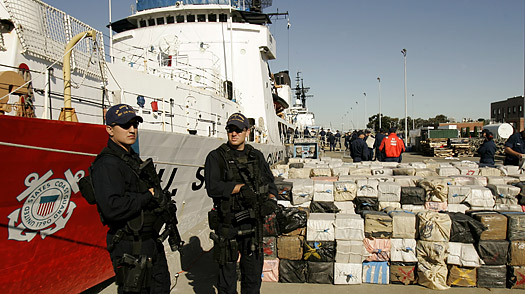
Many proponents of legalising marijuana say that the drug war isn’t working, but is the war working? Mr. DuPont believes that drug enforcement efforts are working and that legalising marijuana is a reckless, experimental approach. He says that the right strategy is a balanced approach which means a balance of supply reduction and demand reduction. This balanced approach includes prevention, intervention and treatment, which he contends has been successful in containing illegal drug use and limiting social costs.
He illustrates the success of the balanced approach through the long-term decreases in drug use. Based on a national survey, the percentage of persons aged 12 and older in the US who have used an illegal drug in the past 30 days decreased from 14.1% in 1979 to 8.7% in 2009. This statistic shouldn’t be used to support any argument, as a number of reasons could explain the change in drug use, such as the national survey numbers could easily be skewed, people may have lied, and the timing of use element leads to more variables.
Another statistic supporting his claims, is that the UN Office of Drug and Crime has seen a greater than 80% reduction in annual opioid use over the past century. I found this fact quite interesting because as we know from earlier, at the turn of the century opioid use was wide spread. I delved deeper into this statistic and as noted previously, the British opium trade into China was a huge business. In fact in 1880, India derived 14% of its national income from the Opium trade and when China took to its own cultivation, it accounted for nearly 14% of its national income by 1909. Opioid use in Asia in 1907/08 was 3.3% of the population; the world use was 1.5% of the population. In 2006, opioid use in Asia was 0.24% of the population and the world use was 0.25% of the population[iii]. There are countless differences between today and 1900, yet this global decrease of Opium use is one of the IBH’s key statistics.One of the main differences between the periods is the information access/ability that people have to educate themselves today and also at the turn of the century, opioids were big business and in many cases people didn’t know they were using them.
A bolded statement to support the current drug policy in the response to Colorado and Washington State legalising marijuana says:
“Sound drug policy must be rooted in evidence-based science, not driven by special interest groups who are looking to profit at the expense of our nation’s public health and safety.”
This again is absolutely ridiculous, Mr. DuPont has no evidence behind his statements that the war on drugs is working, he is a member of at least one special interest group and he has been criticized for profiting from marijuana being illegal. Yet, this is a person who has had and arguably still has authority around drug policies.
Message/Increase In Use
Another argument is that legalisation will send the wrong message to people and will lead to an increase in marijuana use.
The response report against the legalisation of marijuana in Colorado and Washington State uses as argument against legalisation, that the US was a first mover in an international multilateral treaty against drugs and that legalisation will set a bad example for other countries. It is safe to assume that this is how some politicians feel about the message that legalisation would send to the American people. Are there a lot of people that would be swayed one way or the other if the US government legalised drugs? What message are they sending if they legalise drugs? You could almost read into the report’s statement that it is more about embarrassment; the people behind this letter, their entire lives have been devoted to the idea that drugs are bad. If you legalise it now, it will make these people look foolish.
Mr. DuPont has stated that the impact of legalisation will make drugs more widely and cheaply available. This will lead to an increase in death rates based on the parallel to the rapid rise in death rates from non-medical use of prescription drugs (which are widely available). Robert’s reasoning is that the drug use population in the world is 4.8%, whereas alcohol use is 40% and tobacco is 30%. He states the rate of drug use is low because they are illegal and that if they were legal they’d have use rates similar to alcohol and tobacco. At the very least though, he recognises that the legalisation of a drug doesn’t mean that everyone will become a user, similar to how not everyone uses alcohol and tobacco[iv].
First off, people in search of drugs these days, seem to have no trouble in acquiring them, so it is a poor assumption to say that use rates will increase to the level of alcohol and tobacco. A strong example to the contrary is that when opioid use was at its peak in China, the use rate was only 3.3% and opioids are some of the most addictive drugs around. Also, using marijuana as the example for a moment, there are no known overdoses of marijuana, ever. How would death rates rise to a level parallel to that of prescription drugs? In the same response letter, Mr. DuPont outlines the negative effects of marijuana, which include: dependence, cognitive, medical, psychiatric, fertility, educational, employment, parenting, workplace and highway and safety. Those are a number of effects which I won’t go in to, but you can pick out a few (if not all) that are a bit of a stretch.
He closes off this argument by saying that the largest increase in drug use will be among teenagers, the disadvantaged, the unemployed, the struggling students and mentally ill. Yet, there is no basis to this statement[v].
Gateway / Cost to society
One of the arguments that has lead to where our drug laws are today is that marijuana is a gateway to harder drugs. This is a fact says Stephen Baldwin. What is the context of this comment, is it a gateway drug for everyone? That seems a bit hard to believe, so maybe just a few. In any case, the Drug Policy Alliance, says that this is not a fact, a statement which is supported by research evidence. Perhaps, it appears to be a gateway drug in cases with some people, but you could argue that it isn’t the marijuana driving these people to other drugs, that could just be a result of their personality.
Mr. Dupont (in the IBH response letter) raises that another key aspect of legalisation is there would be substantial social and economic costs to humanity, if marijuana were legalised. Again saying that the greatest impact of the changes would be felt by the helpless, innocent and naive. More specifically, if drugs were made legal the rates of use, abuse and dependence would increase along with unemployment, under-employment and health care costs. In this instance, these statements are supported by statistics.
The social cost of alcohol is $235 billion each year and tobacco is $193 billion each year (which is a combination of $96 billion in medical costs and $97 billion from lost productivity). The words ‘lost productivity’ caught my attention right away when I read this, but I’ll continue. The social cost of all illicit drugs combined is $193 billion per year (lost productivity accounts for $120 billion, punishment costs account for $61 billion and health costs $11.4 billion). The cost of lost productivity trumps punishment costs by a 2-to-1 factor and is substantial for both tobacco and illicit drugs. So, what is lost productivity? The Office of National Drug Control Policy (ONDCP) defines lost productivity as representing work in the labor market and in household production that was never performed, but could reasonably be expected to have been performed absent the impact of drug abuse. In other words, drugs should stay illegal otherwise we will have a substantial increase in lost productivity!!
The greatest share of productivity losses is from criminal activities being offenders who were prosecuted and others who pursued crime careers to pay for their drug use. Together, there was about a million people years of effort that could have and arguably would have been available to the economy, had these individuals not been involved in drug-crime. The other large portion of the productivity losses are drug related deaths from all causes which include, overdose, poisoning, homicide, HIV and Hepatitis. A small portion ($4 billion total of the $130 billion in this example) relates to lost productivity of the victims of crime and institutionalisation[vi].
The correlation of illicit drugs to legal drugs and the use of lost productivity costs puts in perspective the ridiculousness of Mr. DuPont’s statistics. In fact, many of the productivity costs outlined could be prevented by legalising drugs.
Mr. DuPont expands further on marijuana’s cost to society[vii]:
“Marijuana use commonly saps the users motivation and determination. The losses with marijuana are tied to caring about people and goals. Not all users experience this effect but many do leading to the conclusion that marijuana causes users to become “stupid and lazy”, terms readily accepted by people who have been heavy marijuana users once they have stopped use. Marijuana is also called the “careless” drug because it causes any users to care less about the things they cared a lot about before beginning using the drug.”
He continues:
“Marijuana significantly impacts our environment, school scores and drop-out rates, accident and vehicle fatality rates, employee productivity, healthcare and treatment costs, and the potential for escalation to further illicit drug use and addiction.”
It is important to remember that these are his personal opinions without supporting evidence which is the foundation of why marijuana is illegal around the globe. Yet, there are no facts to support any of the claims.
Addiction / bad for you
Another argument is that marijuana is addictive and it is bad for you. The response letter to the marijuana legalisation in Colorado States that THC level are now 13.7%, a substantial increase from the 1970’s. This increase in potency has lead to dramatic increases in admissions to the emergency room and to drug treatment programs. The letter contends that marijuana is addictive and is the number one addiction treatment for children and number two addiction treatment for adults. My perspective is that the THC levels of marijuana are a result of its illegal status, this argument seems counterproductive to the letters aim. People are being admitted to the emergency room for marijuana overdose? The dramatic increase in drug treatment programs for everyone is likely a result of punishment for possessing marijuana. Isn’t the baseless statistic that marijuana is the number one treatment addiction for children, not further evidence that the war on drugs has been a failure and that children have more access to it in its illegal state.
No medical research
The response letter to the marijuana legislation in Colorado State says that marijuana is not a medicine and that there is overwhelming consensus in the medical community that it is not a medicine. The letter says the FDA’s stance is that smoked marijuana has no medical value and there are many other more effective, better tested alternatives. This sounds absolutely ridiculous again, as we will see in the Pro section of the debate below, Dr. Sanjay Gupta’s documentaries have clarified that marijuana is a very useful medicine. It is also medically available in 22 States because of efficacy to help those with certain illnesses. Even back when the marijuana laws were first being passed in the US, Dr. Woodward contested that the drug has some value in the field of psychology/psychiatry.
Impact on youth development
This fact is not raised by any of the sources I have used for the anti-legalisation section, but from the various documentaries I have seen, it appears that there may be some evidence that marijuana could have a negative effect on the development of the young brain. There may well be concrete evidence to support this fact and I have nothing against raising legitimate harms of the drug. However, the people raising this issue aren’t those that are pushing against legalisation, since this is not a strong argument for those people. I believe it is very important though and reinforces the fact that legalisation and regulation require an age limit, in order to prevent use by minors. Currently, there are no guards against use by minors.
Psychosis
It is said that in rare instances, people have developed psychosis from marijuana use. Again I’m not sure about the legitimacy of this claim. It seems to be a larger risk for those using it in their youth. I believe the difficultly of the research is that one can’t be sure if someone already had psychosis issues and marijuana just brought it out.
A BBC reporter, Nikki Taylor has a show where in one episode she embarked on a journey to find out what marijuana was about. She is not an experienced marijuana user and decides to conduct her research at a pot cafe in Amsterdam. On her initial visit, the owner of the shop is quite helpful and informative. The owner recommends a marijuana strain for Nikki and says relax, have a coffee. The owner advises to have 2-3 puffs of the splif, wait for 7-10 minutes to see what happens and then take another 2 puffs and repeat. So, Nikki in her very scientific research ignores all of that and takes a total of 25 puffs of this spliff (which is made of weed and tobacco). What ensues after 10 minutes is that Nikki descents into a state of paranoia and thinks she is crazy.
The next day, she doesn’t take responsibility for misusing the drug and instead condemns it[viii]. At this point, I stopped watching the show. Why should I watch and listen to your documentary, when you not only don’t listen to simple instructions, but you demonize marijuana based on your poor judgment. Grow up Nikki Taylor.
I have a personal perspective on the different effects that marijuana may have. The high is a very foreign feeling, but it is just a change in perception. So, why is it tough for some people to handle their first time smoking? Well, the answer might be that it’s just such a shock out of their normal way of being and consciousness. Maybe they start panicking because they are so deeply invested in the “system” that has been created based on their normal state of consciousness. As Joe Rogan says, if pot does you in, it might just be that the marijuana got there first[ix].
I remember a particular example of watching someone so deep in the societal customs of life, that when they tried smoking in a comfortable environment with two good friends, they reacted like they were hyperventilating; asking why is my heart racing? Well that’s an effect of the drug potentially, but based on your thoughts, current activity and state of mind your heart races sometimes. Maybe try to relax and take a deep breath. Some people are just not suited for exploring other states of consciousness and that is completely fine. Education on drugs rather than taboo and baseless statistics is the best approach to ensure everyone is well informed if they are going to try a drug.
Conclusion
In conclusion, I think the only legitimate argument against the legalisation of marijuana is the potential effects on the young brain. This is in fact a reason to legalise the drug, as regulation would restrict youth use. One cannot help but think the crusaders against legalisation are either addressing the topic from their personal bias or trying to justify their legacy and life’s work. The IBH makes a statement which leads me to think there is some attempt at justification which says – “Surrendering to the modern drug epidemic is not consistent with the IBH’s mission.”[x]
[i]IBH response to Global Commission – – http://www.ibhinc.org/pdfs/IBHCommentaryonGlobalCommissionReport71211.pdf
[ii]DuPont and DEA response to Colorado and Washington State legalisation – http://reason.com/assets/db/13625253281147.pdf
[iii]UN Office of Drug and Crime report – http://www.unodc.org/documents/wdr/WDR_2008/WDR_2008_eng_web.pdf
[iv]IBH Letter – http://www.ibhinc.org/pdfs/IBHCommentaryonGlobalCommissionReport71211.pdf
[v]Ibid
[vi]ONDCP report – https://www.ncjrs.gov/ondcppubs/publications/pdf/economic_costs.pdf which details what lost productivity stands for
[vii]Robert DuPont’s blog – http://www.wfad.se/blogs/robert-dupont/1017-why-marijuana-is-the-most-dangerous-drug
[viii]Truth About Smoking Cannabis – http://www.youtube.com/watch?v=sLtHOiIpJyM
[ix] Joe Rogan on Breaking the Set – http://www.youtube.com/watch?v=U8JgSuaFh5M
[x]IBH Letter – http://www.ibhinc.org/pdfs/IBHCommentaryonGlobalCommissionReport71211.pdf
 oldmatesblog
Reblogged this on 4:20 Smokers Blog.