
History of Marijuana[i][ii]
There is evidence of the inhalation of cannabis smoke that can be found as early as the 3rd millennium BC. Cannabis leaf fragments and seeds were found next to a 2500+ year old mummified shaman in China. There is also evidence of Cannabis consumption that has been found in Ancient Egypt. Cannabis is known to have been used by Ancient Hindus of India and Nepal, and Ancient Assyrians. Even pipes dug up from Shakespeare’s garden have traces of Cannabis.
Cannabis was first criminalized in countries around the world beginning in the early 20th century. More specifically, the first restrictions for sale of Cannabis came into effect in 1906. It was outlawed in a couple of countries beginning in the 1910’s and 1920’s.
Let’s delve deeper into the original laws on Cannabis in the US. Two US professors have put together a detailed history of the recreational use of marijuana in the US and the documentary Grass has some insightful facts. Back in 1900 there were far more people addicted to drugs (between 2% and 5% of the adult population). This is a result of the use of morphine in various legitimate medical operations and the Patent medicine industry. People would be given morphine throughout their entire hospital stay and then leave addicted to morphine. The US Civil War also saw extensive use of morphine, particularly in the battlefield operations of the North army. As previously noted, the Patent Medicine industry lead to the most addicted group to being rural living, middle-aged white women. In general, medical resources were scarce, so patent medicine salesmen visiting rural areas would have a significant impact on the life there. Many of the patent medicines turned out to be up to fifty percent morphine. Whatever ailed you, the medicine would work, so you’d get more. Thus, a big difference between drug addiction at the turn of the century and drug addiction today, is that in the past nearly all drug addiction was accidental.
After the creation of the FDA in 1906, the very first federal law to criminalize the non-medical use of drugs came in 1914 in the form of the Harrison Act. The Harrison Act applied to opium, morphine and its derivatives, and the derivatives of the coca leaf. The interesting part about the Act is that it was a tax act. The drafters on the floor of Congress stated they wanted the Act to regulate the medical use of these drugs and they wanted to criminalize the non-medical use of them. It was widely thought during these times that Congress did not have the power to impose these laws regulating a profession in the States or to pass a general criminal law. Thus to avoid opposition, they enacted into law the Harrison Tax Act.
There were two taxes: the first tax was paid by doctors, essentially a doctor would pay the tax and get a stamp that allowed them to prescribe the drug to patients (as long as the regulations were followed). The second tax for users required you to pay a large tax for every single non-medical exchange of these drugs. It was outrageous though to pay a large tax in exchange for something that was worth five dollars in large quantities, so people didn’t pay the tax. Those found with the drugs who hadn’t paid the tax were charged with tax evasion.
In 1937, the US passed the national marijuana prohibition in the form of the Marihuana Tax Act which prohibited the production of hemp, as well as cannabis. The reason that hemp was also outlawed is open to debate, with some scholars believing that certain people had interests in destroying the US hemp industry. Before jumping into the Marihuana Tax Act, it’s important to understand the laws at a State level because marijuana was first prohibited by some US States before 1937.
In the period between 1915 and 1937, 27 States had passed criminal laws against the use of marijuana. Why did these States have marijuana laws? Well, after going back into the records of those States and looking at the newspapers of the times, it was found that the 27 States could be divided into 3 explanations for their marijuana laws.
Rocky Mountain and South-Western States
The Rocky Mountain and south-western States had seen a substantial migration of Mexicans just after 1914. The Mexicans had come to this area in search of better economic conditions and they brought marijuana with them. The white population in these States knew nothing about marijuana (this is at a time when the white race considered themselves to be superior to others). Thus the States in this area passed a law against marijuana use to discriminate/punish the Mexicans. One proponent of the law in Texas is quoted on the Texas Senate floor as saying, “All Mexicans are crazy, and this stuff (referring to marijuana) is what makes them crazy.” A proponent of the law in Montana State is quoted as saying, “Give one of these Mexican beet field workers a couple of puffs on a marijuana cigarette and he thinks he is in the bullring at Barcelona.”
North-Eastern States
The north-eastern States is the second group that enacted a law on marijuana, but there wasn’t a large Mexican population in this area. The reasons for the law becomes clear though when looking at the newspapers of the times. Here are paraphrases from a 1919 New York Times editorial. “No one here in New York uses this drug marijuana. We have only heard of it from down in the Southwest but we’d better prohibit its use before it gets here. Otherwise, all the heroin and hard narcotics addicts cut off from their drug by the Harrison Tax Act and all the alcohol drinkers cut off from their drug by the 1919 prohibition will substitute this new and unknown drug marijuana for the drugs they use.”
Utah
These two reasons accounted for why 26 of the 27 States prohibited marijuana, the remaining state was the first State ever to enact a criminal law against the use of marijuana, Utah. Utah had a large Mormon influence and in 1910 at a meeting of the Mormon Church it was declared that polygamy was banned. As a result, a large number of Mormons moved to the northwest of Mexico to continue in the “traditional ways”. By 1914, the Mormon people and the religion hadn’t done very well in Mexico and so the Mormon’s moved back to Utah but they brought marijuana back with them. The Mormon church has always been opposed to the use of euphoriants of any kind. So, in 1915 at another Church meeting, the use of marijuana was decreed contrary to the Mormon religion and enacted as a criminal law (at this time in Utah, the legislature enacted every religious prohibition as law).
Now that we have that background, the first federal laws against marijuana were enacted in the 1937 Marihuana Tax Act. In order to pass a federal law in those days, Congress had to hold hearings which can last for a very long time. The national marijuana prohibition hearings though lasted only two hours in total.
There were three bodies of testimony at the hearings:
Government
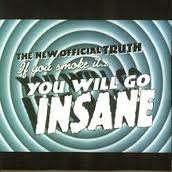
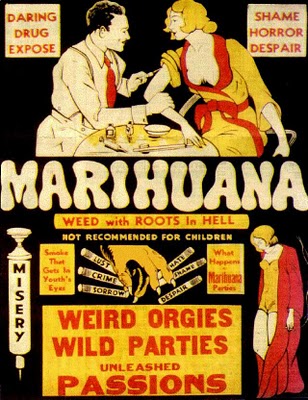
Commissioner Harry Anslinger, the new Commissioner of the Federal Bureau of Narcotics gave the first testimony. The FBI and the FBN were two newly created federal police agencies in the 20s and 30s. Harry Anslinger was the Commissioner of the FBN from 1930 until 1962. He was the first US drug czar (being the person who directs drug-control propaganda). He claimed that marijuana was the most dangerous drug, which was made famous in the 1936 movie Reefer Madness. In the movie, various crimes occur in the one hour film, from a hit and run killing, to manslaughter, suicide, attempted rape, and a general descent into madness. The movie Reefer Madness was part of Anslinger’s media campaign to raise public awareness about the marijuana menace in helping to get the 1937 Act passed. His approach was reliant on coverage by the media and supported by moralist groups.
In Anslinger’s testimony, he was reading a statement written for him by the District Attorney of New Orleans. He is quoted as saying, “Marihuana is an addictive drug which produces in its users insanity, criminality, and death.” This was the government testimony to support marijuana prohibition from the Commissioner.

Industry
The next testimonies were based on the idea of prohibiting the cultivation of Hemp in America. As I have noted, hemp can be used for a variety of purposes, so industrial spokesmen from each of the industries impacted testified. Of the spokespeople only the birdseed people balked, since apparently hemp seed made the birds grow lustrous coats and sing a lot. So, the birdseed people got an exemption from the Marijuana Tax Act.
Medical
The last hearing was medical and two people from the medical community were interviewed. The first guy was a pharmacologist at Temple University who claimed that he had injected the active ingredient in marihuana into the brains of 300 dogs, and two of those dogs had died. When asked by Congress, “Doctor, did you choose dogs for the similarity of their reactions to that of humans?” The answer of the pharmacologist was, “I wouldn’t know, I am not a dog psychologist.” Wow, poor dogs. Also, the active ingredient in marijuana was first synthesized in a laboratory in Holland after World War II. So, it remains a mystery as to was injected into the dogs, but it was almost certainly not the active ingredient in marijuana. The other testimony came from Dr. William Woodward who was both a lawyer and a doctor, appearing as the Chief counsel to the American Medical Association to testify on its behalf.
He is quoted as saying, “The American Medical Association knows of no evidence that marihuana is a dangerous drug.” Immediately upon saying this, one congressmen says “Doctor, if you can’t say something good about what we are trying to do, why don’t you go home?” The next congressman said “Doctor, if you haven’t got something better to say than that, we are sick of hearing you.” The committee had reason to be hostile with the doctor. In 1936, FDR had just been re-elected for his 2nd term in a massive landslide win, and the whole premise of the Democrat party during the election was around the social and economic reform legislation in the New Deal. From 1932 to 1937, the American Medical Association had been opposed to every single piece of New Deal legislation and congress was full of New Deal supporter, so they were sick of hearing from their opposing views.
I’ve read a good amount of the Dr. Woodward testimony and I recommend perusing it. I want to highlight two noteworthy pieces of information from it. During his testimony, Dr. Woodward notes that a prohibitive tax wouldn’t be beneficial as upon research marijuana may be found to have medical use and that evidence of research by one doctor showed that Cannabis had remarkable properties in revealing ones subconscious; hence it was useful for psychological and psychoanalytical research. The second being that Dr. Woodward draws attention to the fact that newspaper publications presented by the committee to support the new law included statements about marihuana causing crime and that school children are great users. Yet, none of these departments were called to testify and upon inquiry to the Bureau of Prisons, Children’s bureau and Office of Education, they all had no evidence of these situations. This shows the impact of Anslinger’s propaganda on the media and the media’s impact on society. The committee did not care if their facts were supported or if marijuana may have a medical benefit but instead just wanted the law to be passed.
The bill was passed out of the committee and on to the floor of Congress. The debate on the floor of Congress lasted around one minute and thirty-two seconds. The bill was brought on the floor of the house at 5:45pm on a Friday in August with no air-conditioning.
Before the vote, a guy from upstate New York, stood up and asked two questions, which constituted the entire debate on the national marijuana prohibition. 1) What is the bill about? Which the speaker replied to “I don’t know. It has something to do with a thing called marihuana. I think it’s a narcotic of some kind.” The guy from upstate New York then asked 2) Does the American Medical Association support this bill?
A guy who was on the committee that interviewed Dr. Woodward, and who later went on to become a Supreme Court Justice, stood up and said, “Their Doctor Wentworth came down here. They support this bill 100 percent.” The billed passed the vote and in the Senate there was no debate or recorded vote, thus the bill was signed into law by FDR.
Immediately after the passing of the Act, Commissioner Anslinger held a small news conference with most people who knew nothing about marijuana to name the psychologist from Temple University (the dog guy) the official expert of the FBN on marijuana which he held until 1962. For me, all of this is pretty mind-blowing stuff, it’s almost like some kind of sideshow.
During the 30’s and 40’s, marijuana was routinely referred to as “the killer drug” or the “assassin of the youth”. These ideas were continued to be put forth by Commissioner Anslinger as he was trying to build his FBN; more fear equally meant more funding to fight the menace. Marijuana got a worse reputation in the late 30’s and early 40’s for being used as an insanity plea in 5 famous murder trials. The two things you need for an insanity plea are an expert witness (which ended up being the pharmacologist from Temple University) and the testimony of the defense. The pharmacologist from Temple when on trial admitted to using marijuana which he says turned him into a bat. Then the defense would say it made them crazy when they used it. This defense worked in all 5 cases, in one case two police officers were killed in cold blood and the accused never even admitted to using marijuana. He said that it gave off ‘homicidal vibrations’ when it entered the room, so he started killing cats, dogs and ultimately police officers. Commissioner Anslinger pulled the plug on the official expert being allowed to testify as criminals were going free which stopped the insanity pleas but the taboo remained.
In 1951, the US enacted a new drug law called the Boggs Act. The perception at this time was that the drug was known to impact high school kids, it was deemed a foreign enemy and a communist tool to subvert the American youth. The linking of marijuana to a Communist plot continued through the period of Cold War hysteria. So, the penalties were quadrupled in every single offense category. The hearings were again held for the Boggs Act. A doctor of a rehabilitation clinic testified ahead of Anslinger. He testified that the medical community knew that marijuana wasn’t addictive, it doesn’t produce death, or insanity and instead of producing criminality, it likely produces passivity.
During Anslinger’s testimony, he now agreed with the doctor but said it is the certain first step on the road to heroin addiction. Anslinger’s statement, lead to the birth of the gateway drug notion and marijuana was grouped in with other harder drugs.
In 1956, another new drug law, the Daniels Act was put into place, the penalties around drugs were doubled again. In Virginia at the time, possession of drugs brought a mandatory minimum sentence of 20 years, first degree murder a mandatory minimum sentence of 15 years and rape 10 years. The sale of marijuana was a mandatory minimum of 40 years.
The 1960’s and 70’s saw the rise of drug counterculture in America, the Korean and Vietnam Wars were unpopular and the youth were seen as rebellious. There was a large uprising in the United States around the excessive prison time being given to the youth for using marijuana.
As a response, in 1969, the Dangerous Substance Act was passed and lowered the penalties removing the taxing methodology. This Act classified all illegal drugs into categories/schedules based on their potential for abuse and their medical value. Richard Nixon then commissioned a study to explore the effects of marijuana. The results of the study were that marijuana does not lead to crime. Nixon was outraged by the result and instead launched the War on Drugs in 1971 and in 1973, to fight this war he merged all of the drug enforcement agencies to create the DEA. Around the time the War on Drugs campaign was launched, marijuana had started to become popular with adults. This lead to the loosening of marijuana laws. In 1973, Oregon passed a bill to decriminalise marijuana. In a 1977 study, it was seen over the 4 year period (from 1973 to 1977) that there had been no increase in use. At this time, 10 other States along with Oregon had legalised marijuana.
Jimmy Carter won the 1977 election and had campaigned on the decriminalisation of marijuana. As president, Carter put forth a proposal to Congress to decriminalise marijuana and have it regulated by the States. Unfortunately, there was a drug scandal involving one of Carter’s aides, so he and the government could no longer support marijuana. The cost of the war on drugs from 1970-1977 was US$76 billion.
In 1980, Ronald Reagan campaigned on the message of cracking down on drug use. His vice president, George HW Bush succeeded him for the presidency in 1989 and came down even harder on drug users. He is paraphrased as saying in a public address, “Using drugs is against the law, if you use illicit drugs you will be punished; some think we won’t have room in prisons, we will make room; the rules have changed.” The cost of the war on drugs from 1980-1998 was US$214.7 billion[iii].
The results of the crackdown on drugs had such an impact that at one point in the late 90’s, 30% of a minority group male population (between 20 and 29) in Baltimore were under court supervision for drugs.
[i] http://www.druglibrary.org/schaffer/History/whiteb1.htm
[ii] Documentary entitled Grass, narrated by Woody Harrelson
[iii]Ibid
 oldmatesblog
Reblogged this on 4:20 Smokers Blog.